
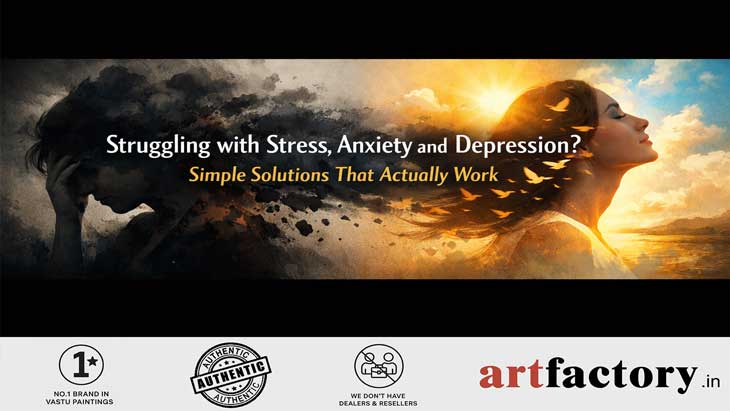
Struggling with Stress and Anxiety? Simple Solutions That Actually Work
1. What causes stress, anxiety, and depression?
Stress often comes from external pressures, while anxiety is excessive worry, and depression is a prolonged low mood. They can result from lifestyle, environment, genetics, or emotional triggers.
2. Can stress turn into anxiety or depression?
Yes. Chronic stress can gradually lead to anxiety disorders and even depression if not managed early.
3. What are simple daily solutions to reduce anxiety?
Deep breathing, mindful breaks, physical activity, and limiting screen time can significantly reduce anxiety.
4. How can I improve my mental health naturally?
Balanced diet, sleep, meditation, positive surroundings, and creative outlets like art or painting help naturally.
5. Do surroundings affect mental health?
Yes. Your environment directly influences mood, energy levels, and emotional balance.
6. What role does Vastu play in mental wellness?
Vastu helps balance energy flow in spaces, promoting calmness, positivity, and mental clarity.
7. Can paintings really reduce stress?
Yes. Specific paintings influence emotions, calm the mind, and create a peaceful atmosphere.
8. Which colors reduce anxiety?
Soft blues, greens, whites, and pastels are known to soothe the mind and reduce stress.
9. What should I avoid if I feel depressed?
Avoid isolation, negative content, cluttered spaces, and irregular sleep patterns.
10. How long does it take to feel better?
With consistent effort, small improvements can be felt within days, while deeper healing may take weeks or months.
Having Stress, Anxiety and Depression? Here is the Solution
In today’s fast-paced world, feeling overwhelmed has almost become the norm. Deadlines, responsibilities, expectations, and constant digital noise can quietly build pressure inside us. What begins as occasional stress can slowly turn into anxiety—and if left unaddressed, may even lead to depression.
If you’ve been feeling mentally exhausted, emotionally drained, or constantly on edge, you are not alone. More importantly, there are ways to regain balance—through simple lifestyle shifts, mindful habits, and even by transforming the energy of your surroundings.
Let’s explore this step by step.
Understanding the Problem
Stress is your body’s response to pressure. It can be short-term but exhausting.
Anxiety is a persistent feeling of worry or fear, often without a clear reason.
Depression goes deeper—bringing feelings of sadness, low motivation, and disconnection.
These conditions are not signs of weakness—they are signals. Signals that your mind and environment need attention and care.
Practical Solutions That Actually Work
1. Start With Your Daily Rhythm
Your mind thrives on stability.
Wake up and sleep at consistent times
Get at least 20–30 minutes of sunlight
Include light physical activity (walking, yoga, stretching)
Even small routines create a sense of control and calm.
2. Calm the Mind Through Breath
When anxiety rises, your breathing changes.
Try this simple practice:
Inhale slowly for 4 seconds
Hold for 4 seconds
Exhale for 6 seconds
Repeat for a few minutes. This signals your nervous system to relax.
3. Reduce Mental Clutter
Your mind gets overloaded just like your space.
Limit unnecessary screen time
Avoid constant negative news consumption
Take short “mental breaks” during the day
Silence is not empty—it’s healing.
4. Express, Don’t Suppress
Bottled emotions intensify stress.
Write your thoughts in a journal
Talk to a trusted friend
Engage in creative activities like painting, music, or writing
Expression transforms emotional weight into release.
The Missing Piece: Your Environment
Many people focus only on internal solutions—but your surroundings play a powerful role in shaping your mental state.
This is where Vastu principles come in.
Vastu is based on balancing energy flow in your environment. When your space is aligned, your mind naturally feels lighter, calmer, and more focused.
One of the most effective and simple Vastu remedies is art and paintings.
Vastu Solutions Through Paintings
Art is not just decoration—it carries energy, symbolism, and emotion. The right painting can subtly influence your thoughts and feelings every day.
Here’s how:
1. Nature Paintings – For Calm and Healing
What to use:
Flowing rivers
Sunrise scenes
Green forests
Placement:
North or East wall
Impact:
Nature visuals create a sense of openness and freshness. Flowing water especially symbolizes emotional release and movement—helping reduce mental stagnation and anxiety.
2. Rising Sun – For Hope and Positivity
What to use:
Sunrise with warm golden tones
Placement:
East direction
Impact:
The rising sun represents new beginnings. It subconsciously encourages optimism and helps lift depressive thoughts.
3. Abstract Soft-Tone Art – For Mental Balance
What to use:
Soft blues, whites, pastel blends
Gentle, flowing abstract forms
Placement:
Living room or workspace
Impact:
These paintings reduce visual stress and calm overactive thinking. They are especially helpful for anxiety-prone minds.
4. Uplifting Conceptual Paintings – For Motivation
What to use:
Light bulbs (ideas and clarity)
Trees made of books (growth and learning)
Birds or open skies (freedom)
Placement:
Study area or workspace
Impact:
These visuals inspire direction and purpose, helping overcome feelings of emptiness or lack of motivation.
5. Avoid These Paintings
Certain visuals can negatively affect your emotional state:
Storms, war scenes, or sadness
Lonely or dark imagery
Abstract chaos with harsh colors
These can subconsciously increase tension or emotional heaviness.
Why Paintings Work
Your brain constantly absorbs visual information—even when you’re not aware of it.
Calm visuals → Relaxed thoughts
Bright, hopeful imagery → Positive emotions
Balanced compositions → Mental clarity
Over time, your surroundings start influencing your inner state.
Bringing It All Together
Healing from stress, anxiety, or depression doesn’t require drastic changes. It begins with small, consistent steps:
Care for your body
Calm your mind
Express your emotions
Align your environment
When you combine practical habits with a supportive space, transformation becomes natural—not forced.
Final Thought
You don’t have to fight your mind—you can support it.
Sometimes, the solution is not just within you, but also around you. A peaceful space, a meaningful painting, a moment of stillness—these small changes can create a powerful shift.
Start simple. Stay consistent. And allow yourself the space to heal.
Call to Action
Start today:
- Declutter one corner
- Add one calming painting
- Take one mindful breath
Your journey to a stress-free and peaceful life begins now.
For more details,visit: https://www.artfactory.in/
Comments : (0)